

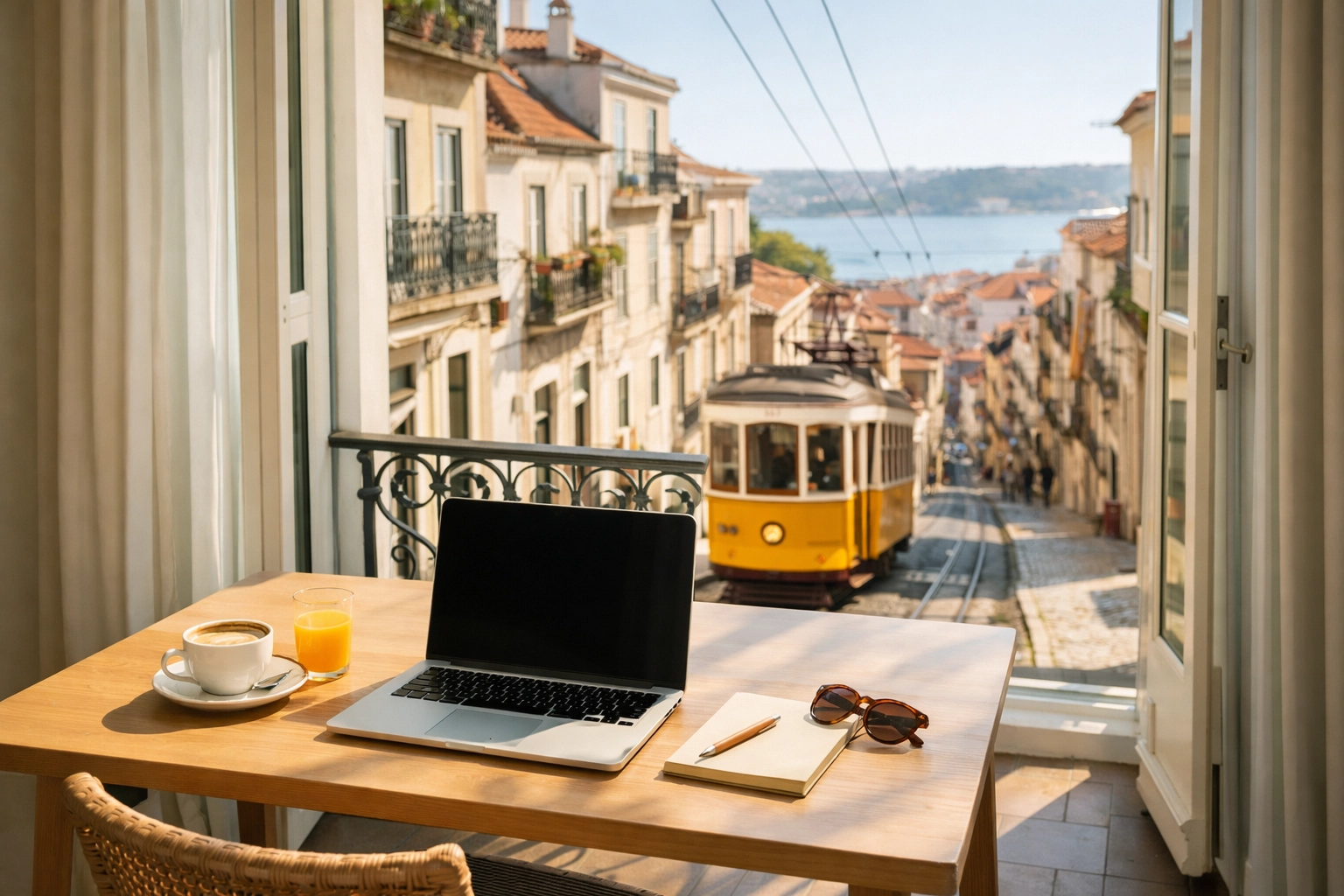
Let’s be honest: the traditional "two-week holiday" is starting to feel a bit… 2019.
Fast forward to 2026, and the "workation" has officially moved from a niche lifestyle hack to a standard way of living. Whether you’re a freelancer, a startup founder, or part of a fully remote team, the ability to swap your home office for a sun-drenched terrace in Lisbon or a sleek coffee house in Berlin is no longer a dream, it’s a Tuesday.
But as anyone who has tried to join a high-stakes Zoom call from a "laptop-friendly" café with dodgy WiFi knows, it isn’t always sunshine and rainbows. Success in 2026 requires a bit more than just a passport and a prayer.
If you’re planning to conquer Europe this year while keeping your boss (or your clients) happy, this is your definitive roadmap.
Why Europe is Still the King of Workations
In 2026, Europe remains the undisputed heavyweight champion for remote workers. Why? Because the infrastructure has finally caught up with the ambition.
According to recent data, Europe now accounts for nearly 20 of the top 30 countries globally for internet speed. We’re talking lightning-fast fiber even in the smaller towns of Portugal and Slovakia. Plus, with the continent being the safest region worldwide and boasting some of the most progressive flexible work policies, Germany leads the pack with 80% of workplaces offering remote options, the "work" part of your workation has never been easier.
But it’s the "ation" part that really sells it. Within a two-hour train ride or a cheap flight, you can switch from the historic streets of Krakow to the Alpine views of Austria.

The Top 5 Hotspots for 2026
Where should you actually go? The "best" spot depends on your budget and your vibe, but these five are crushing it right now:
1. Lisbon, Portugal (The Veteran)
Lisbon isn't just a trend; it's an institution. It’s the premier workation hub for a reason. Expect to spend between €1,350–€1,800 a month for a comfortable life. You’ll get 170 Mbps WiFi as standard, a massive community of digital nomads, and winters that feel like a mild British spring.
- Pro tip: Use the Reef map to find spaces away from the tourist traps in Baixa.
2. Amsterdam, Netherlands (The Productivity Hub)
Amsterdam has the highest percentage of remote workers in the world. The city is designed for it. It’s expensive, yes, but the efficiency is unmatched. Everything is walkable (or bikeable), and the "work from anywhere" culture is baked into the DNA of every local bistro.
3. Bratislava, Slovakia (The Hidden Gem)
If you want your Euro to go further, head east. Bratislava is incredibly well-connected to Vienna and Budapest, but the living costs are a fraction of the price. You’ll find 24-hour coworking spaces that are better equipped than most London offices.
4. Hamburg, Germany (The Professional Choice)
Germany’s progressive tax rebates for home workers (yes, even in 2026!) make Hamburg a very attractive spot. It’s organized, green, and the coffee culture is surprisingly "buzzy."
5. Krakow, Poland (The Social Spot)
Krakow is where you go if you’re worried about being lonely. The expat community is thriving, the nightlife is legendary, and the coworking scene is affordably priced and incredibly sociable.
The Logistics: Don't Get Caught Out
Before you book that one-way ticket to Madeira, we need to talk about the "boring" stuff.
Visas and the 90-Day Rule
If you’re coming from the UK or the US, the Schengen rules are still your biggest hurdle. You can stay for 90 days within any 180-day window.
Want to stay longer? 2026 is the year of the Digital Nomad Visa.
- Portugal: Offers a visa for stays up to two years.
- Croatia: Their temporary residence permit is a fan favorite, requiring a monthly income of roughly $2,700 USD: one of the most reachable bars in Europe.
Passport Validity
Check your expiry date now. Seriously. Most European countries require your passport to be valid for at least six months beyond your planned return date. Applications are still taking around 10 weeks, so don't leave it until the last minute.
Budgeting
Living the dream isn't free. While Lisbon is affordable, a one-bedroom rental in a city center can still bite. Expect to pay around $1,400–$1,500 for a central spot in a major hub. If you’re looking to save, check out our pricing guide to see how a Reef subscription can actually save you money compared to daily "café hopping."

The Secret to Staying Productive: Ditch the "Café Struggle"
We’ve all been there. You find a gorgeous café, you buy a €5 latte, and then you realize there are no power sockets. Or the music is so loud you can’t hear yourself think. Or, worse, you feel the "guilt" of sitting there for three hours on one drink.
In 2026, the savvy remote worker has moved past this.
The most successful workations happen when you separate your "tourist time" from your "deep work time." This is where Reef comes in. Instead of hunting for a table near a plug, you can use the app to book into professional, curated venues that actually want you there.

Whether it’s a hotel lobby with 200 Mbps WiFi or a dedicated coworking space with free-flowing coffee, having a guaranteed "base" for the day changes everything. It means you can smash out your work by 3 PM and actually enjoy the city you’re in, rather than spending all day fighting with a spotty hotspot.
Check out how it works on our about page.
Your 2026 Workation Checklist
Ready to go? Here is your "no-brainer" list to ensure you don't just survive, but thrive:
- Test your tech: Don't find out your laptop battery is dying in a plaza in Seville. Get a portable power bank and a universal adapter.
- Get the right insurance: Ensure your health insurance covers "remote work" and not just "leisure travel."
- Book your "Office" in advance: Don't leave it to chance. Use the Reef app to see which venues are near your accommodation.
- Timezone management: If you're working for a UK or US company, plan your "exploration hours" accordingly. In Europe, you’ll often find you have the mornings free if your team is back in the States.
- Join the community: Don't just sit in your Airbnb. Go to meetups, use coworking lounges, and talk to people. The best part of a workation is the people you meet.

Final Thoughts
The world has changed. The office is no longer a building; it’s a mindset (and a very good WiFi connection). Europe in 2026 is more accessible, more connected, and more exciting than ever for those of us lucky enough to work remotely.
So, why stay at your kitchen table? Whether you're looking for a month-long stint in the sun or just a week of "inspiration" in a new city, the infrastructure is ready for you.
Ready to start your journey? Join the waiting list or browse our FAQs to see how we can help you find your next "office" anywhere in the world.
Safe travels, and happy working! 📍🌍