

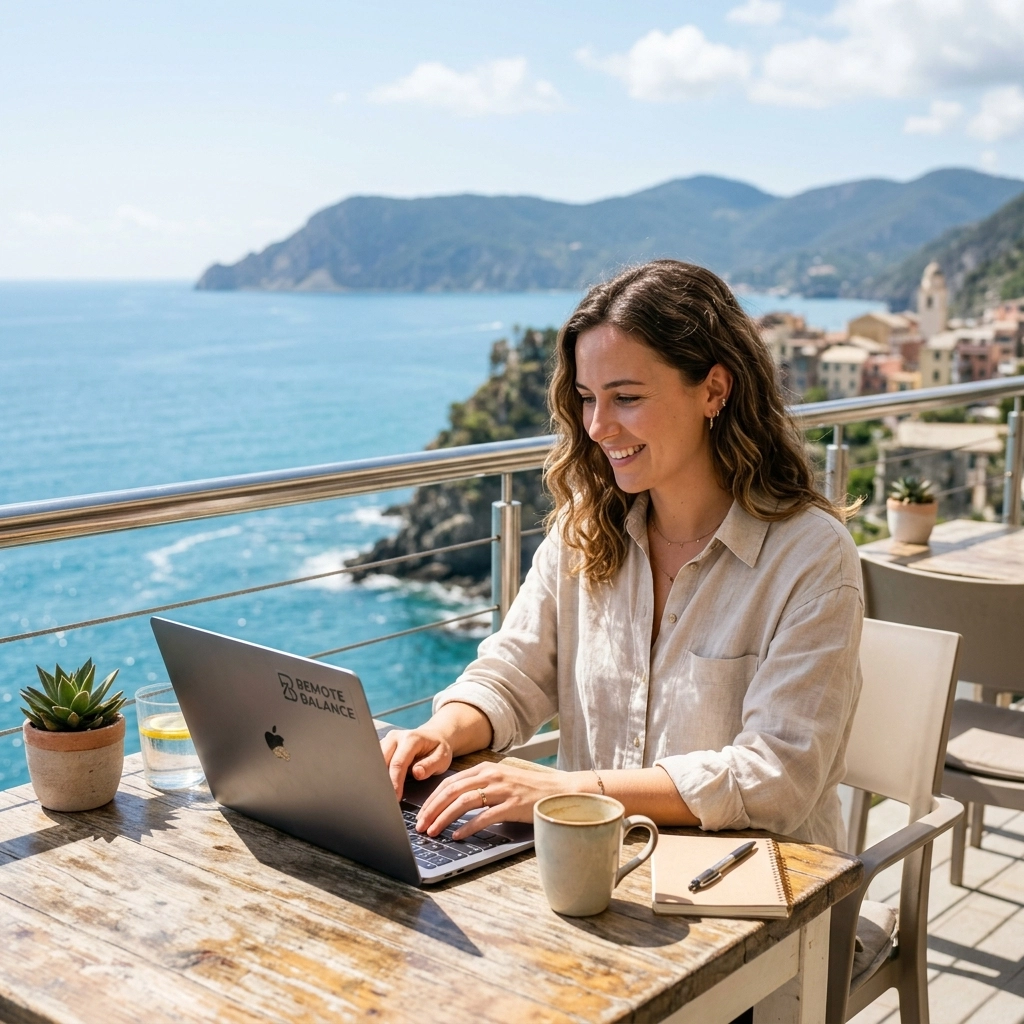
Let’s be honest for a second. We’ve all had those mornings. You wake up, roll out of bed, shuffle three steps to your desk (which might actually just be your kitchen table), and flip open the laptop.
The same four walls. The same pile of laundry in the corner. The same hum of the fridge.
At first, working from home felt like a dream: no commute, no beige cubicles, and the freedom to wear sweatpants all day. But lately? It feels a bit more like Groundhog Day. If you’re finding that your motivation has dipped, your focus is shot, and you’re feeling more isolated than ever, you aren't alone. You’re likely brushing up against remote work burnout.
The good news? It isn’t terminal. Sometimes, all it takes to snap out of the funk is a change of scenery. I’m James, CEO of Reef, and I’ve spent a lot of time thinking about how where we work impacts how we feel.
Here is why a new environment is often the best medicine for burnout, and three ways you can make the switch today.
The Burnout Reality: It’s Not Just "Feeling Tired"
Before we dive into the solutions, we need to talk about what remote work burnout actually looks like. It’s sneaky. It doesn't always show up as a dramatic breakdown; often, it’s a slow fade.
You might notice you're:
- Struggling to start: Tasks that used to take twenty minutes are now taking two hours.
- Feeling "Zoom-ed" out: Even a 10-minute catch-up feels like a monumental effort.
- Losing the boundary: You find yourself checking emails at 9 PM because there’s no physical "end" to your workday.
- Loneliness: You haven't spoken to a human in person (besides the delivery driver) for three days.
This happens because our brains are wired for associations. When your living room is your office, your gym, and your cinema, your brain gets confused. It never truly switches "on" for work or "off" for rest.
1. The Psychological Reset: Separating "Home" from "Work"
The first way a new environment saves you is by creating a hard psychological boundary. When you step out of your front door and head to a dedicated workspace, you’re sending a clear signal to your brain: It’s time to perform.
Think of it as a mental "gear shift." When you’re at home, your brain is subconsciously thinking about the leaky tap or the Netflix show you’re mid-way through. When you book a Reef venue, that baggage stays at the door.

The Power of the "Third Space"
There’s a concept called the "Third Space": it's not home, and it’s not the traditional corporate office. It’s a place like a design-led hotel lobby or a buzzy, laptop-friendly workspace. These environments offer a "low-stakes" social atmosphere. You aren't being watched by a boss, but you aren't alone either.
This shift in environment triggers novelty-induced dopamine. A new view, a different chair, and even a new background noise can be enough to kickstart your focus. Suddenly, that report you’ve been procrastinating on feels manageable again.
2. Curing the Loneliness Epidemic with "Passive Socializing"
Loneliness is the silent killer of remote productivity. Even the most introverted among us need a bit of human energy to keep the gears turning. Working from home can feel like living in a vacuum: and after a while, that silence starts to feel heavy.
Switching to a new environment: like a coworking-friendly venue: allows for what I call passive socializing.
You don’t necessarily need to be in back-to-back meetings or networking events. Just being in a room where other people are also "smashing out" their tasks is incredibly motivating. It’s the "body doubling" effect: seeing someone else focused makes you want to stay focused too.

When you use Reef, you’re entering spaces where everyone is in the same boat. You might grab a coffee at the bar and have a 30-second chat about the weather, or simply share a nod with someone across the table. It sounds small, but these tiny human interactions are the "antidote" to the isolation of the spare bedroom.
Plus, it’s much easier to justify a proper lunch break when you aren't just eating toast over your keyboard. Whether you’re a solo freelancer or part of one of our teams, getting out into the world reminds you that you’re part of a community.
3. Restoring Routine Without the Rigidity
One of the biggest traps of remote work is the "flexible schedule" that somehow turns into "no schedule." Without a commute, the day has no bookends. You start late, you finish late, and you feel productive… never.
A new environment forces a healthy routine back into your life.
If you decide to spend Tuesday and Thursday working from a Reef venue, your day suddenly has a structure:
- The Morning Prep: You get dressed (properly!), grab your bag, and leave the house.
- The Goal-Oriented Session: You’ve made the effort to go to a venue, so you’re going to make that time count.
- The Hard Stop: When you pack up your laptop to head home, the workday is over.
This "simulated commute" is vital for mental health. It gives you time to decompress before you step back into your personal life.

Imagine finishing your day, walking through your front door, and your home actually feels like a sanctuary again because you haven't been staring at its walls for the last nine hours. That’s the dream, right?
How to Make the Switch (Without the Stress)
If you're feeling the burn, don't wait until you're completely exhausted to make a change. Start small. You don't need to commit to a five-day-a-week office lease. In fact, that might just lead to a different kind of burnout.
The beauty of the modern remote world is flexibility. Here’s how to transition:
- Audit your energy: Which days of the week do you feel the most "slump"? For many, it’s mid-week Wednesday or the "Friday fade." Those are the perfect days to book a spot elsewhere.
- Find your vibe: Some people need the quiet, library-style focus of a hotel lounge. Others thrive in the "buzzy" atmosphere of a curated cafe.
- Check the amenities: There is nothing that sparks burnout faster than bad WiFi and a dead laptop battery. Make sure wherever you're going has the essentials.
At Reef, we’ve done the legwork for you. Every venue on our map is vetted for high-speed WiFi, power outlets, and a "work-friendly" atmosphere. No more awkward "Can I sit here with a laptop?" conversations with cafe staff. You’re expected, you’re welcome, and: best of all: there’s often free coffee involved.

The Bottom Line
Remote work burnout isn't a sign of weakness; it’s a sign that your environment is no longer serving your needs. Your brain is craving variety, your body is craving a change of posture, and your soul is probably craving a decent flat white and a bit of human presence.
By stepping out of your "home bubble" even just once or twice a week, you aren't just changing your desk: you're changing your mindset. You'll find your focus returns, your stress levels drop, and: most importantly: you’ll start enjoying the freedom of remote work again.
Ready to escape the four walls? Check out our pricing plans or browse the map to find your next "office" for the day.
Trust me, your productivity (and your sanity) will thank you.
Stay buzzy,
James Coughlan
CEO, Reef 📍